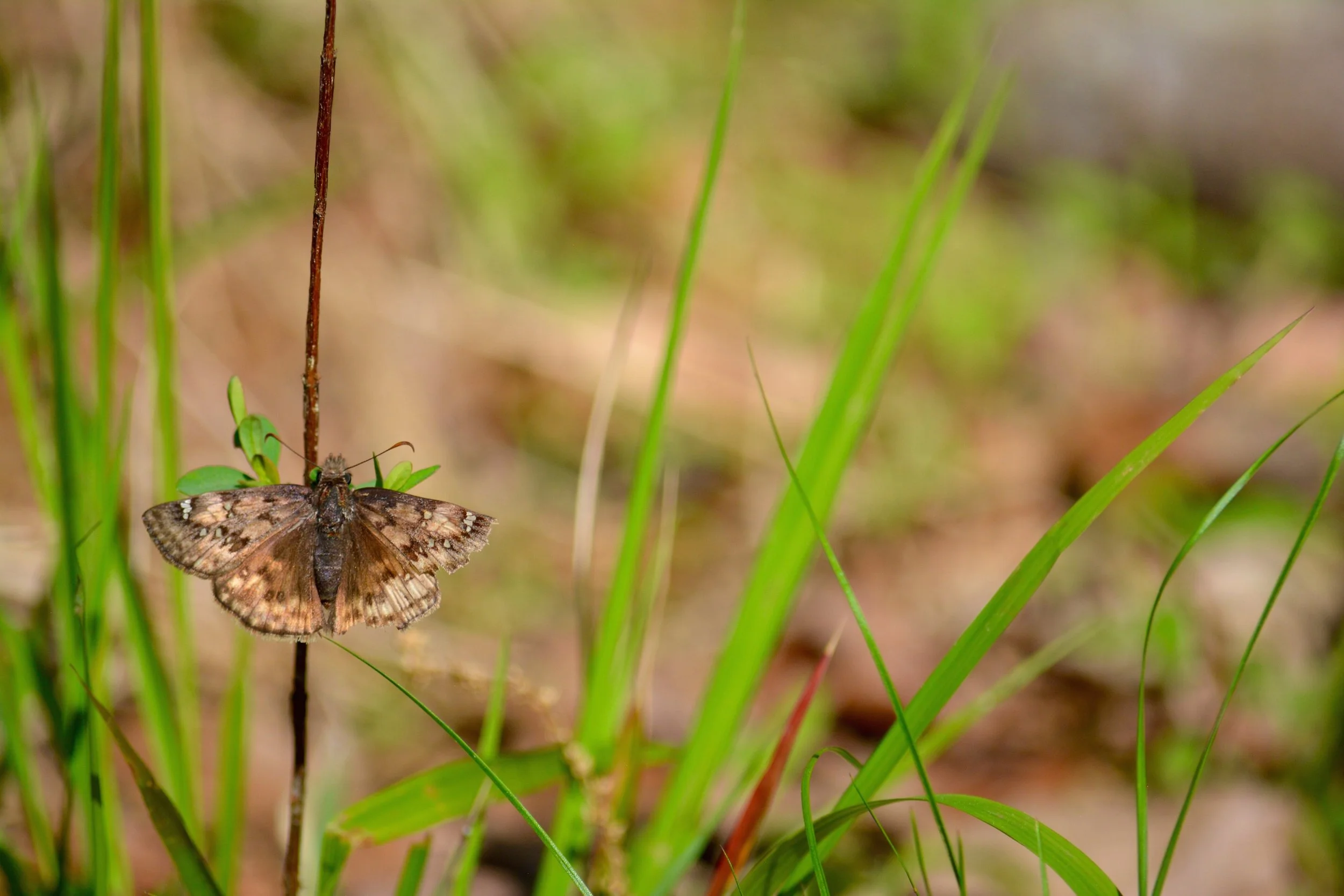
Nature’s Resilience Lab
The Inquiry: Translating the resilience of more-than-human species through research, reflection, practice, and care.
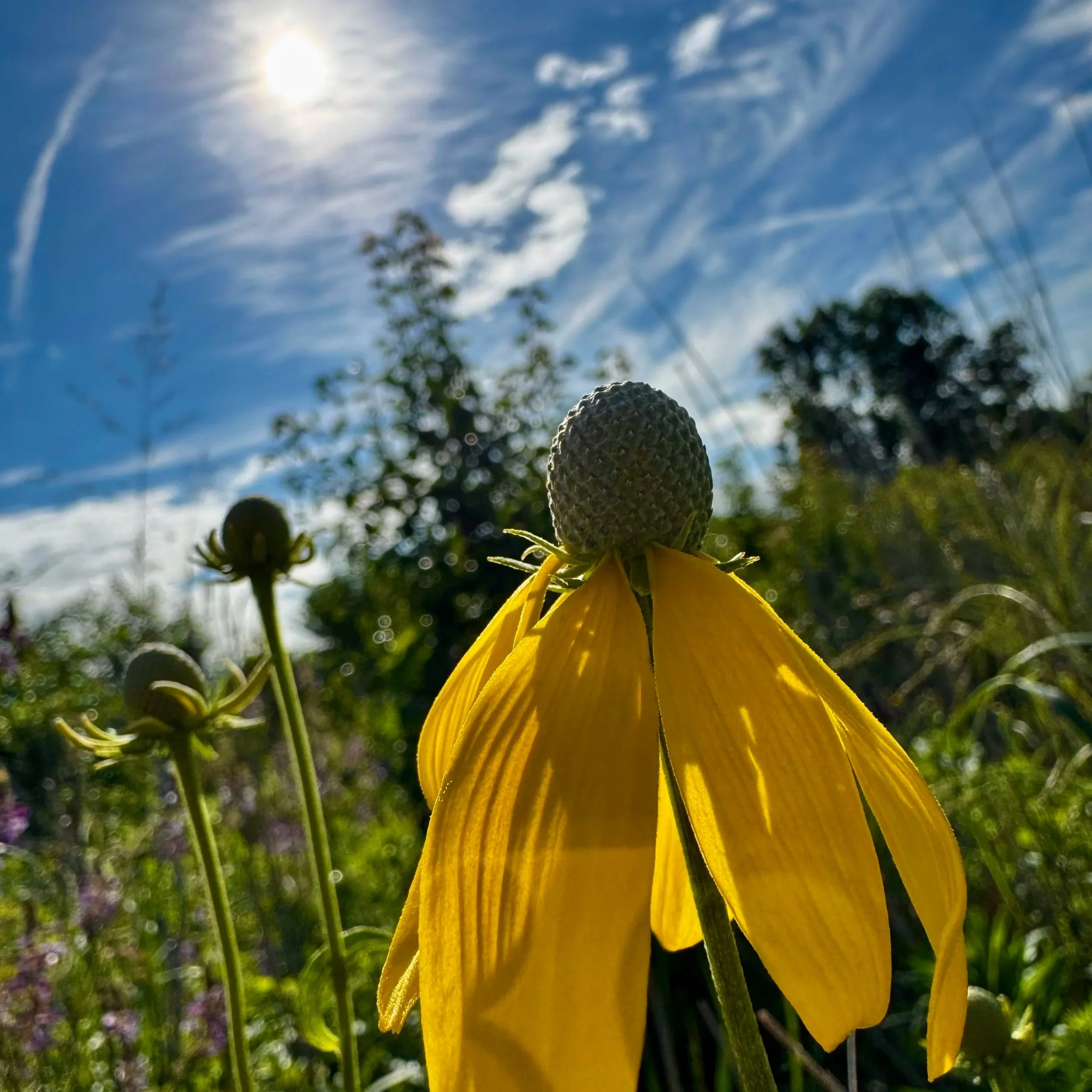
The Bloom of Insight
Nature’s Resilience Lab is a sanctuary for consilience: a living space where disciplines, ways of knowing, and lived experience are woven together. Within The Positive Pollinator™ ecosystem, that weaving takes shape through the natural sciences, conservation social science, environmental humanities, ecological observation, creative practice, and the lived experience of resilience.
The Lab operates on the foundational belief that humans are not separate from nature but part of it, and that honoring our place within the living world makes reciprocal learning, protection, restoration, and healing possible.
Nature’s Resilience Lab is not a brick-and-mortar laboratory. It is an independent, foundress-led research-and-practice space within The Positive Pollinator ecosystem, created for careful inquiry, creative translation, practitioner listening, original art, and nature-based resilience practice.
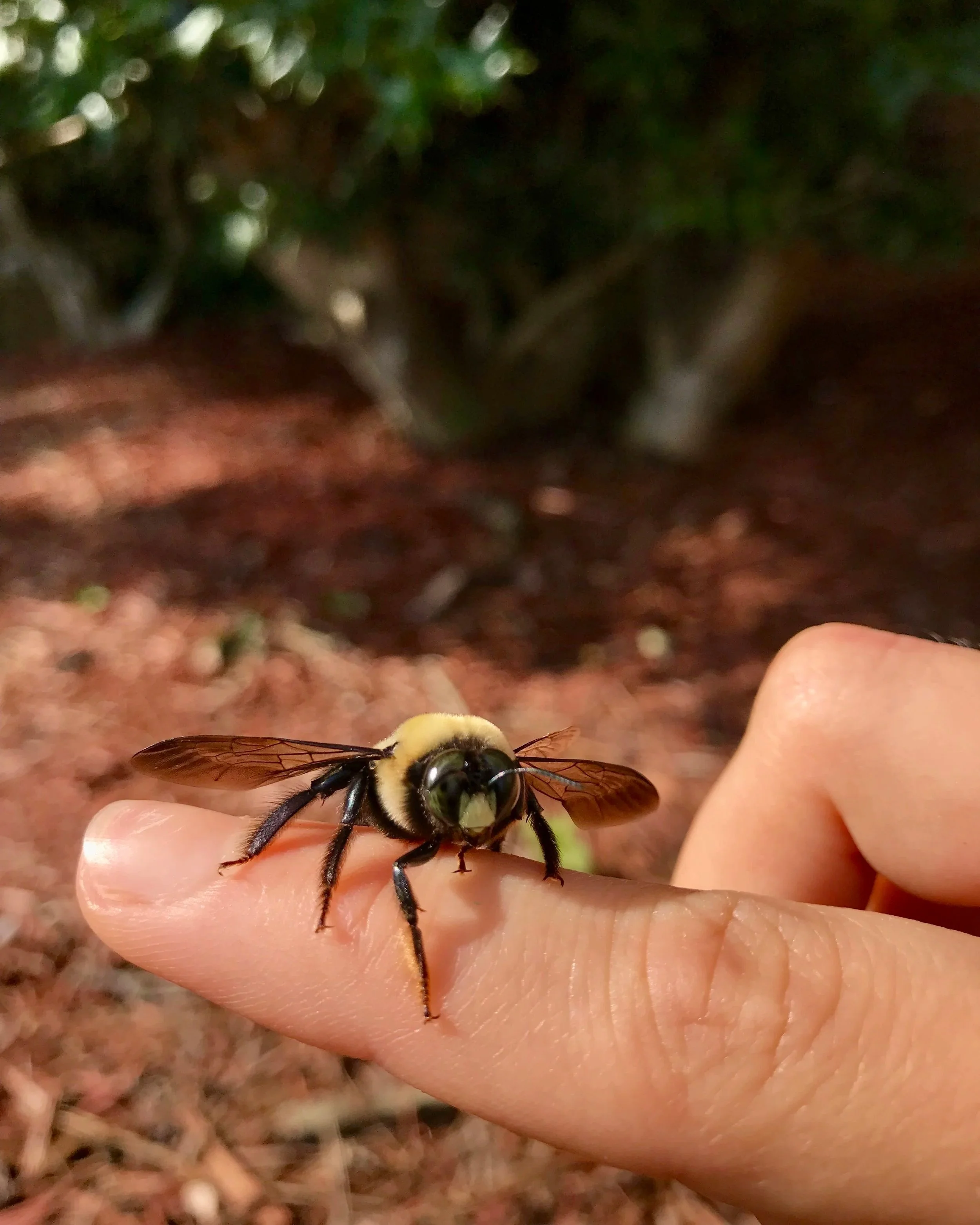
Our Mission: Nature-Based Solutions for the Soul™
The Lab emerged from years of research and practice at the intersections of species biology, conservation social science, land stewardship, creative inquiry, and lived experience. It also grew from a recognized need to bridge these ways of knowing into a more reciprocal practice of care for more-than-human species and the people working to protect them.
The mission carried through the Lab is to support reciprocal resilience by translating lessons from the living world into thoughtful practices that strengthen human capacity while deepening connection to and care for the beings, habitats, and relationships that make such learning possible.
The Lab serves as a bridge where intuition meets intelligence — where data, observation, story, art, and embodied experience can lead to blooms of insight that are shared throughout this ecosystem. The work begins with attention before translation, asking not only what more-than-human resilience can teach us, but how that learning can deepen connection to and care of the living world.
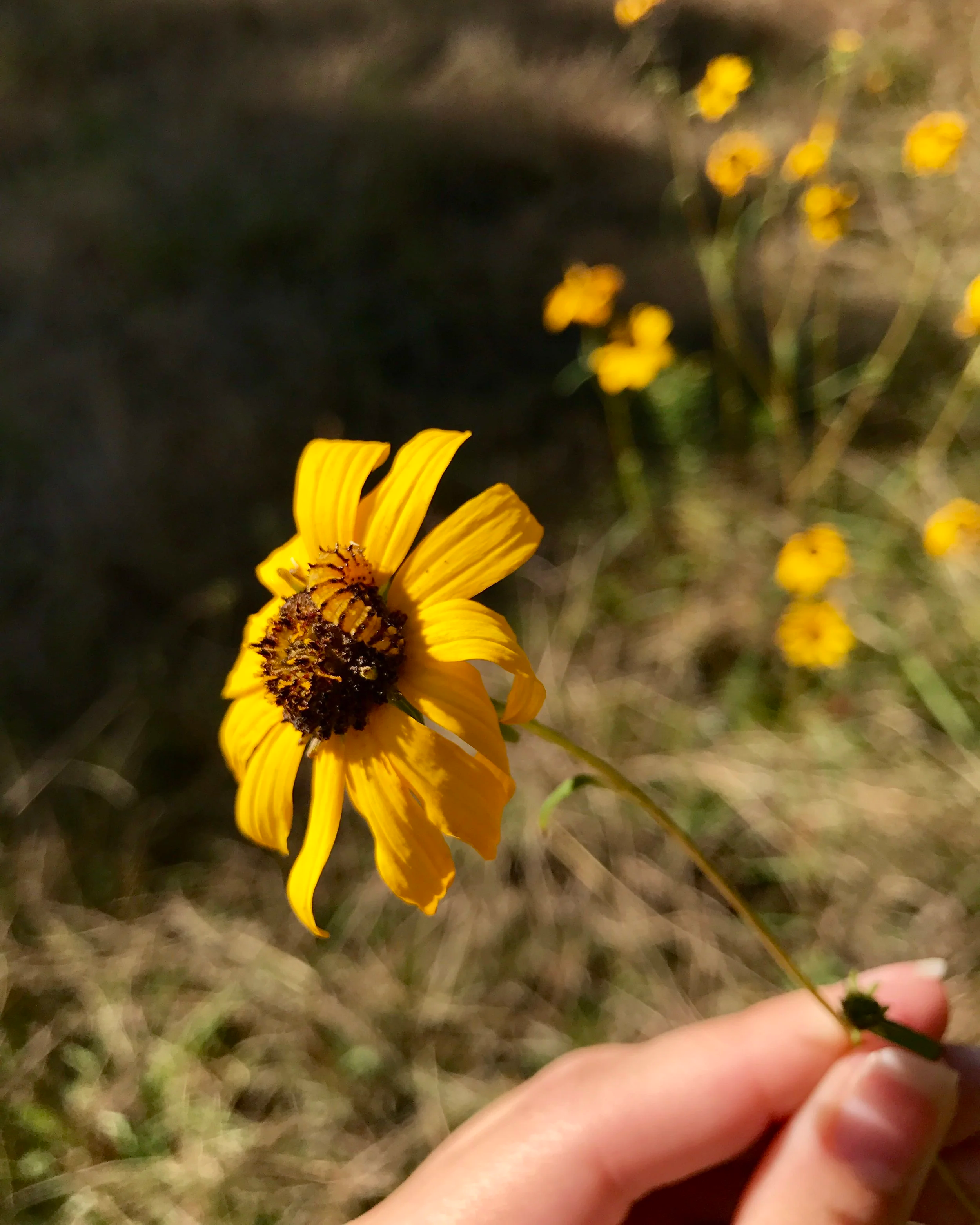
Current Inquiry and Practice
The Lab’s emerging inquiry focus centers on resilience within and across living systems: the conditions that allow people, communities, and ecological relationships to continue caring, adapting, restoring, and renewing over time.
Through Nature-Based Solutions for the Soul™ (NBSS) this work brings natural-history research, ecological observation, reflective writing, visual creation, and guided Specimen Protocols into conversation. The artwork and protocols are not simply illustrations of scientific ideas. They offer additional ways of observing, thinking, and sharing what emerges through sustained attention to more-than-human lives. In these early efforts, the Lab is exploring how functional strategies from the life cycles of bees, butterflies, flora, and ecological relationships can help a new generation of protectors reflect on and rebuild their own resilience.
To follow these developing ideas and efforts, readers are invited to subscribe to The Liminal Ledger, a monthly newsletter where I share ecological learnings, more-than-human species reflections, nature-based resilience protocols, and notes from the Lab as the work unfolds.
A Note on the Lab’s Growth
The Lab is currently in its own solitary momentum phase. Like the foundress queen building her first cell, this digital space is starting small to protect the integrity of the research, the artwork, and the living body of practice taking shape here.
This site is a living record of ongoing inquiry. As the seasons unfold, more details, reflections, and artwork will be added as the inquiry deepens and the work continues to take shape. This work begins with careful attention: to more-than-human species, to ecological relationships, and to the people trying to keep caring in a time of depletion, uncertainty, and change.
Our Intellectual Roots
No knowledge gained, nor innovation realized, is ever a solitary act.
Although The Positive Pollinator is currently foundress-led, this ecosystem has not emerged alone. It grows from many years of research, mentorship, collaboration, observation, field practice, creative practice, and shared knowledge offered by people, communities, disciplines, and more-than-human lives that came before this moment.
The Library is evolving place where I share seminal research, publications, and resources that have shaped the foundations of this work and its applications. My intention is to make the roots of this ecosystem visible: honoring the scholars, practitioners, artists, naturalists, mentors, and traditions of inquiry that have informed it, while offering others pathways for continued learning.
NBSS Spring 2026
The Resilient Emergence Collection
The Resilient Emergence Collection is a seasonal study of pollinators, host plants, and resilient species whose spring strategies offer more than ecological insight. They offer a way back to attention, wonder, and restoration. This is the inaugural Nature-Based Solutions for the Soul™ (NBSS) collection created through efforts both in the Lab and the Studio.
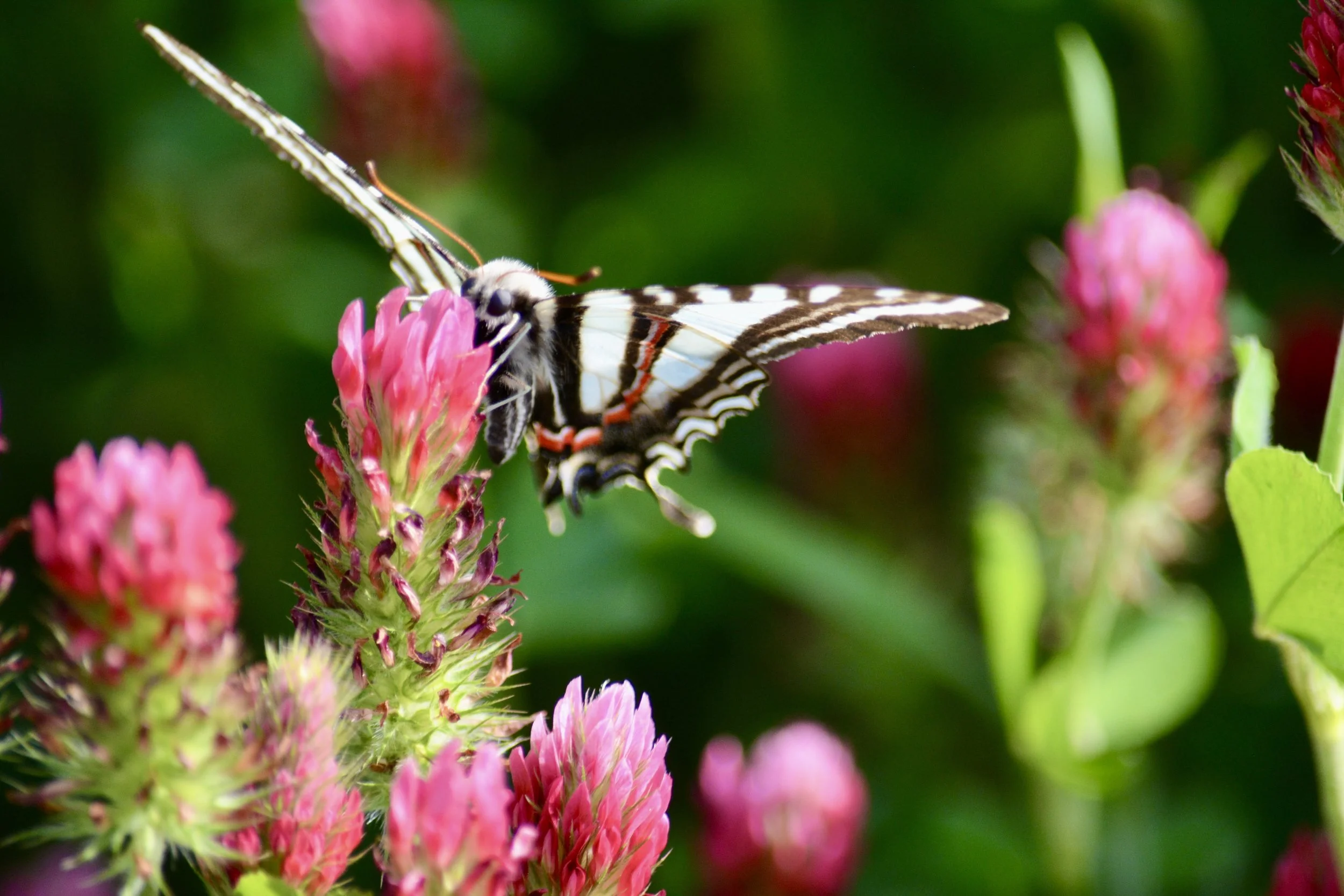
This collection focuses on emergence: the vulnerable threshold between dormancy and motion, solitude and support, hidden preparation and visible becoming. Through the Foundress Queen, Chimney Bee, and Zebra Swallowtail, emergence appears not as a single arrival, but as a sequence of adaptive choices, beginning before conditions feel ready, generating internal heat, and following the relationships that sustain life.
Resilience is co-produced. This study emerges through the consilience of behavioral science, ecological insight, and the specialized genius of our more-than-human neighbors.
-
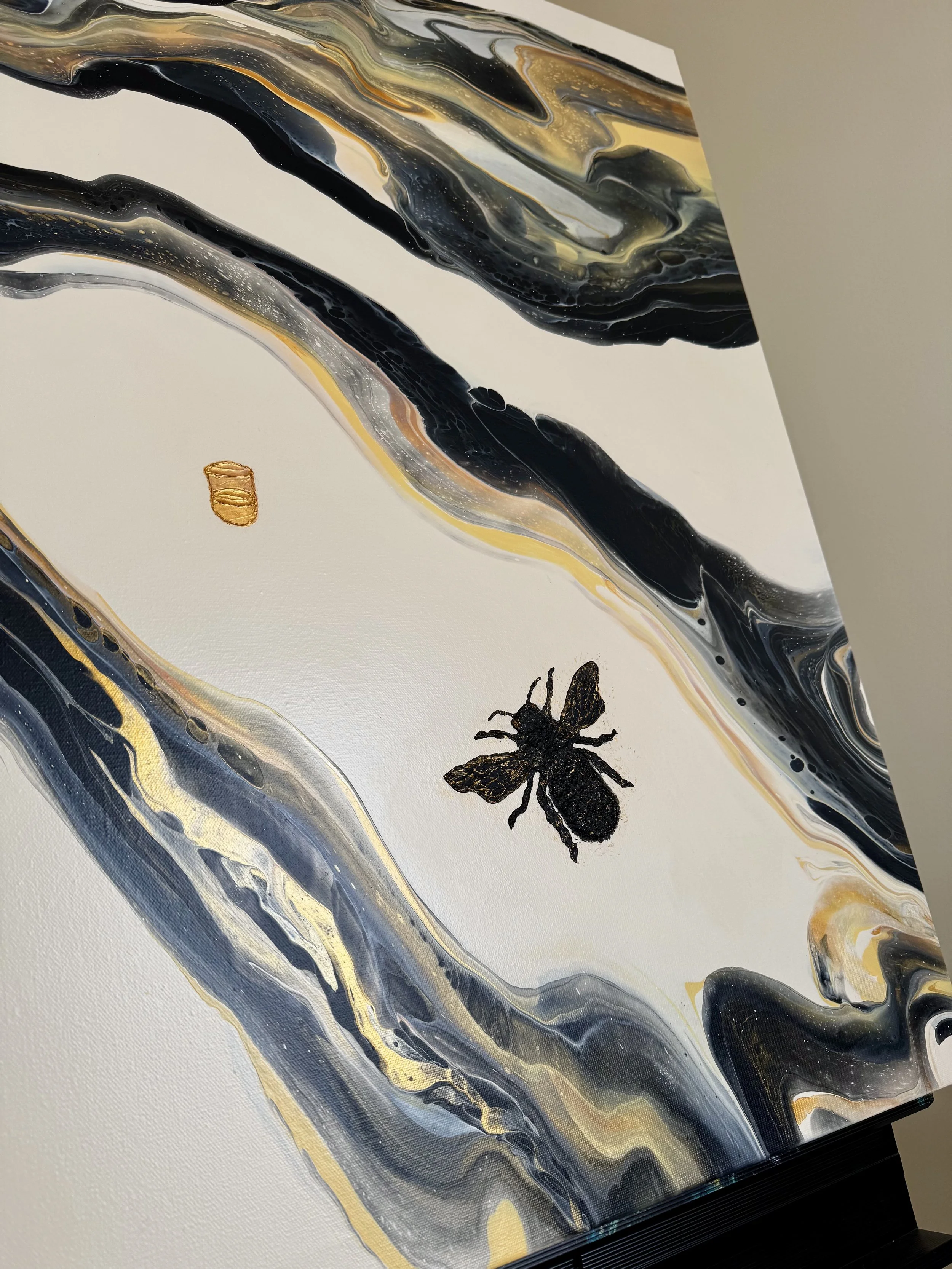
![Abstract painting of a bumble bee.]()
The Foundress Queen
Bombus impatiens (Common Eastern Bumble Bee)
The Foundress Queen emerges from winter alone, carrying the first blueprint of the colony in her body and behavior. Before there are workers, abundance, or visible support, she begins with the first cell: a small reserve of shelter and energy that makes continuation possible. Her resilience asks what it means to initiate life before the world feels fully ready.
-
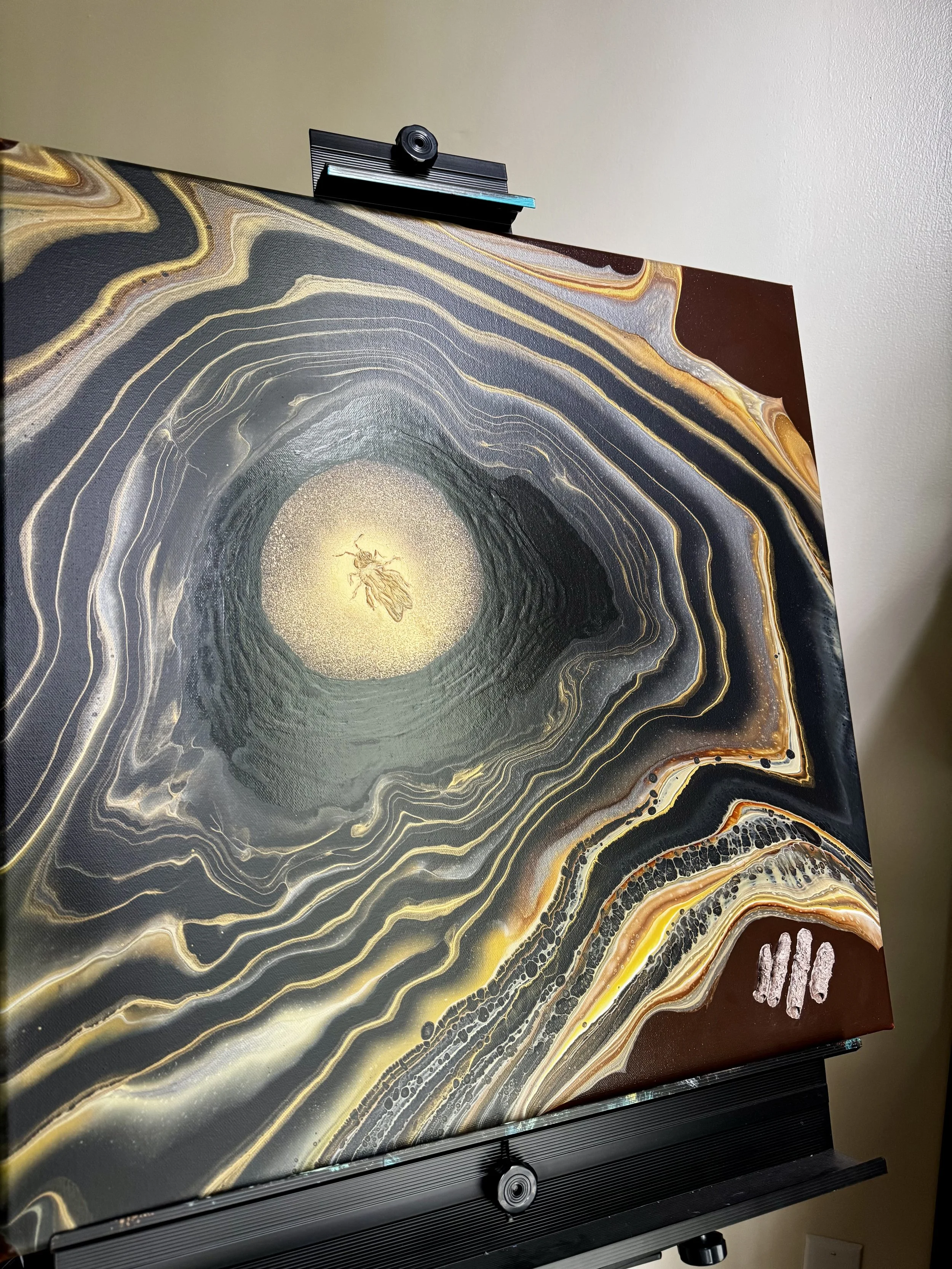
![Painting of a chimney bee with fluid art elements in gold, yellow, black, and brown, and textured paste representing turret structures.]()
The Chimney Bee
Anthophora abrupta (Chimney Bee)
The Chimney Bee offers a dual lesson in boundary and internal heat. Through its turret-like nest entrance and its capacity to warm flight muscles through shivering, this solitary bee demonstrates how resilience may require both protective architecture and self-generated energy. Its strategy reminds us that movement can begin before the environment feels warm.
-
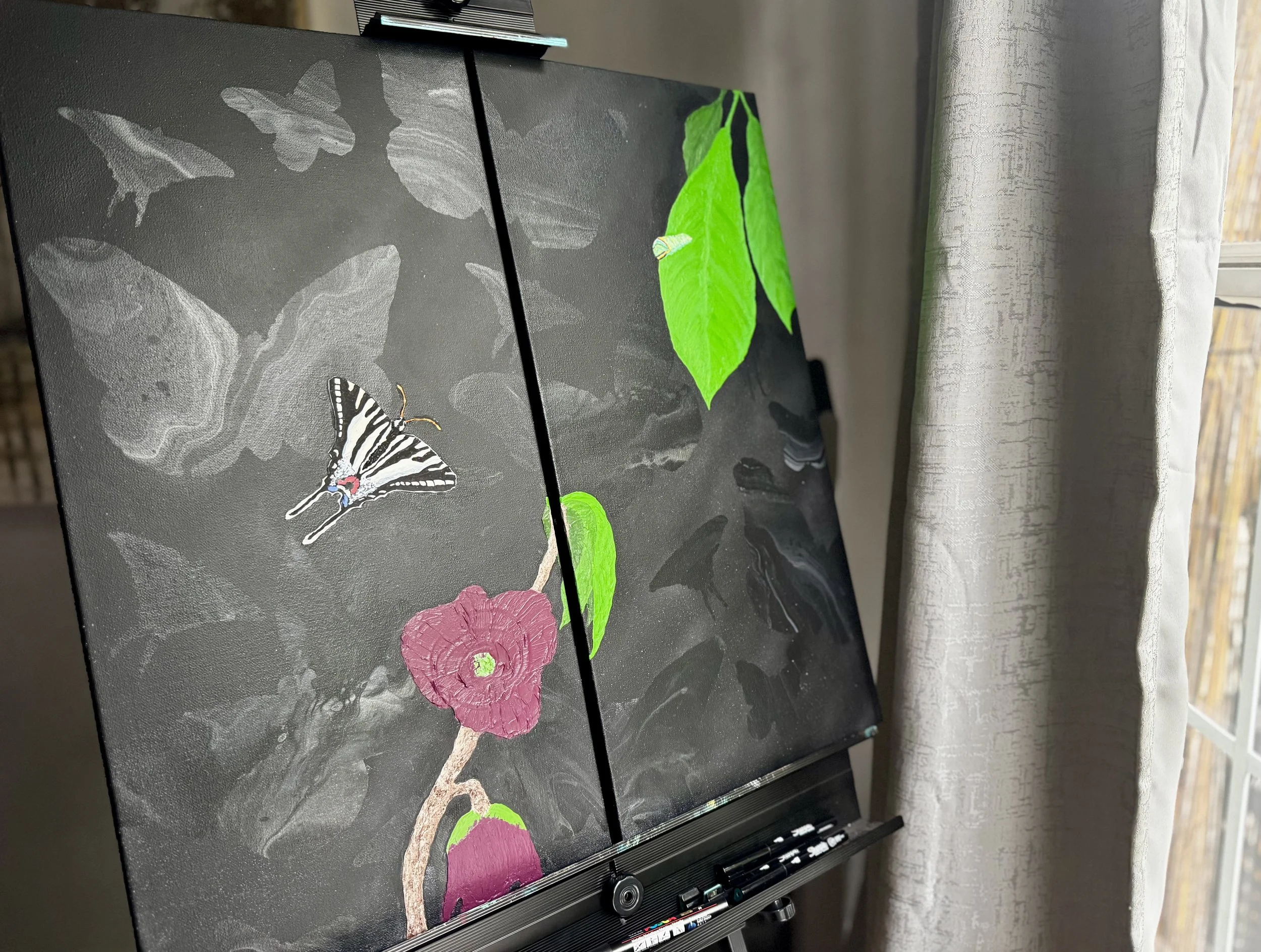
![Abstract painting of zebra swallowtail butterfly and paw paw flowers and leaves.]()
The Zebra Swallowtail
Protographium marcellus (Zebra Swallowtail) with Asimina triloba (Pawpaw)
The Zebra Swallowtail depends on a remarkably specific relationship with pawpaw. Rather than treating narrowness as weakness, this species reveals how discernment, fidelity, and specialization can become sources of strength. Its emergence asks what becomes possible when we stop diluting our specificity and follow what truly sustains us.